Which Balance Is Debited First During Promotional Play?
Introduction
When a promotional offer and a cash balance appear side by side, it may not be clear which one pays for the next stake. There’s no universal rule: a platform may use promotional funds first, cash first, or follow a rule specific to the offer or activity.
This matters because a displayed total can make separate funds look interchangeable when they aren’t. Promotional credit may come with eligibility conditions, while deposited cash may be handled differently. The debit order determines which balance changes and how the play is recorded against the offer.
It’s safest to think of the account as separate ledgers, not one wallet. The displayed total is only a summary; the terms for each balance determine how a transaction is funded.
Analysis: the two balances in play
Cash and promotional funds work differently. A cash balance generally represents funds available under the account’s rules. Promotional credit is issued under an offer and may be limited to eligible activities, a qualifying period, or a required amount of play.
These conditions don’t necessarily say which balance is debited first. They explain how promotional credit can be used, but not always how the platform funds each stake. One operator might use bonus funds first for eligible play; another might use cash first and track promotional progress separately.
Some systems don’t follow a simple order. A stake might be split between balances, paid from cash while still counting toward a promotion, or charged to one balance while a separate meter tracks promotional progress. The terms and transaction record matter more than the label on a button.
Assumptions based on past experience can be misleading. Offers on the same platform may have different conditions, and promotional credit may be eligible for some types of play but not others. A rule from an earlier offer doesn’t prove the debit order for the current one.
Key factors
Offer terms. Check the promotion’s rules for an explicit funding order. References to bonus-first or cash-first use, eligible stakes, or the treatment of winnings may clarify the sequence. If the terms explain eligibility but not debit order, don’t assume the answer.
Activity eligibility. The selected game, market, or feature may determine whether promotional funds can be used. If an activity is excluded, the platform may require cash, block the stake, or apply another rule. A balance shown on the main screen may not be available for every transaction.
Offer status. Promotional credit can be active, pending, restricted, or no longer eligible under the offer’s conditions. A change in status may affect what the account allows, even if the displayed total hasn’t obviously changed.
Wagering or play-through tracking. The balance used to pay for a stake and the amount credited toward a promotion are separate matters. A stake may come from cash without advancing promotional progress, or count toward progress without being paid from bonus funds. Check the terms for both.
Winnings and reversals. The source of a stake may affect how winnings are classified, but the rules vary. Some systems distinguish winnings from promotional play; others use a set conversion or settlement process. Cancellations, voids, and returned stakes may also be handled differently from completed play.
Account display and transaction history. A combined balance can hide what happened. Look for a record that separates cash movements, promotional movements, stakes, returns, and adjustments. If the interface shows only a new total, that figure alone may not reveal the debit order.
Scenario: reading the next transaction
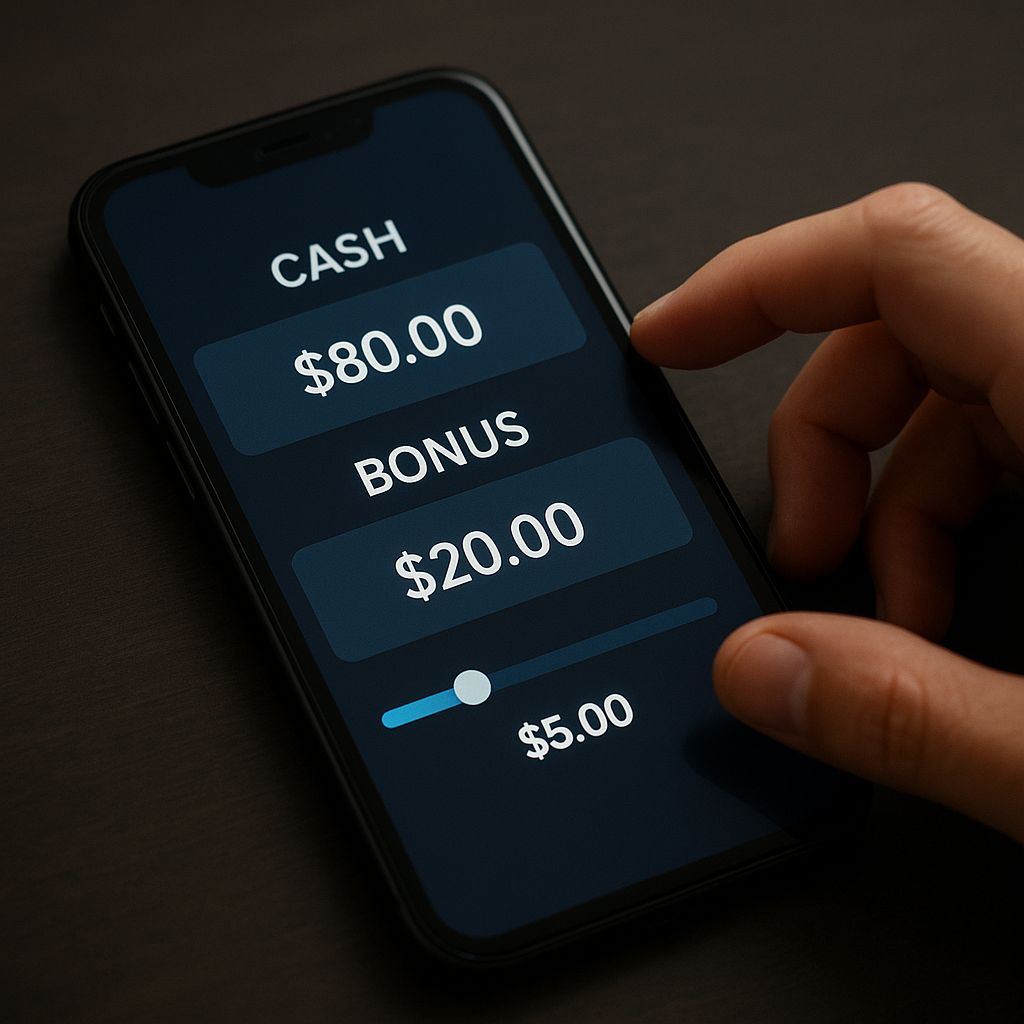
Suppose an account shows both cash and promotional credit, and you place an eligible stake. Before the transaction, note each balance separately and check the offer’s status. Afterward, compare the balances and transaction record rather than relying on the displayed total.
If promotional credit falls by the stake amount while cash stays the same, the transaction appears to have used promotional funds. If cash falls instead, that suggests cash-first funding for that activity. But one transaction shows only what happened in that instance; it doesn’t establish a rule for every offer or game.
If both balances change, check whether the stake was split or whether one balance funded it while a separate promotional meter changed. Look for a record of the funding source and check whether promotional progress moved. A change in progress alone doesn’t prove which balance paid.
If the figures don’t add up, check the transaction status and timing before drawing a conclusion. A pending stake, adjustment, reversal, or delayed update can make the account look inconsistent temporarily. The clearest evidence is a completed transaction record showing the debit and any related promotional accounting.
If the terms and transaction record still seem to conflict, don’t rely on the convention you’re more familiar with. Check whether the specific transaction followed the rules for that offer. A clear explanation should identify the balance used and how the activity counted toward the promotion.
Conclusion
There’s no balance that is always debited first during promotional play. A platform may use bonus funds, cash, both, or a rule that varies by offer and activity. The key details are the offer terms, whether the selected activity is eligible, and the transaction record.
Check each balance separately, distinguish payment from promotional progress, and don’t treat one transaction as a rule for future play. The display shows the total; the terms and ledger show how it was calculated.