Introduction
Urban redevelopment is often described through visible changes: a cleared site, a new building, a redesigned streetscape. Official accounts tend to focus on investment, housing and projected growth. These measures matter, but they cannot show how change feels to the people who experience it.
Oral history helps fill that gap. Conversations with residents, shopkeepers, workers and former tenants preserve details planning documents often miss: where neighbours gathered, how a rent increase changed a household’s choices, or which familiar places disappeared before anyone thought to record them. These accounts do not replace architectural or economic evidence; they show its human consequences. As a form of social research, this approach makes everyday experiences part of the record.
The challenge is to listen without treating any one story as the whole truth. Used well, oral history shifts redevelopment from a story told about a neighbourhood to one shaped with the people who know it best.
Analysis of communities and institutions
A neighbourhood’s story is not simply a clash between residents and developers. It includes renters and homeowners, established businesses and new arrivals, community organisations, planners, landlords and workers whose livelihoods depend on the area. Their interests may overlap, but they do not have equal power or equal influence over what counts as progress. Examining community change means considering how these different experiences shape the neighbourhood over time.
Residents may describe a street through daily routines: a short walk to a relative’s home, a shopkeeper who extends credit, or a public space where people feel recognised. A planning report may describe the same place as underused land. Neither account is neutral. One records relationships; the other makes a case for intervention.
Oral history can reveal this tension without reducing it to a contest between memory and modernisation. People may welcome safer housing, better services or new public spaces while objecting to the terms on which those improvements arrive. Supporting investment does not necessarily mean consenting to displacement.
Institutions have histories worth examining, too. Planners can explain a project’s aims and constraints, while local organisations can describe how consultation worked in practice. Comparing these accounts with residents’ testimony helps researchers identify gaps between what a process promised and what people experienced.
Key factors
Displacement is a visible sign of upheaval, but it does not begin and end with eviction. Rising costs may force a business to close or a household to move far from its support network. Others stay but lose access to familiar services, social ties or a sense of belonging. Oral history can trace these changes over time.
Timing matters. An interview conducted after construction may capture a sense of loss but miss the uncertainty that came before: rumours about acquisition, unanswered questions or the gradual decision to leave. Interviews at different stages can show how expectations change, when residents feel they have influence and which effects emerge only later.
Memory is not a transcript of the past. People reinterpret earlier experiences in light of what happened afterwards; accounts may differ or be incomplete. This is not a flaw to conceal, but a reason to compare testimony with documents, maps, photographs, public records and other interviews—and to be clear about uncertainty.
Power also shapes whose memories are preserved. People with stable housing, free time or confidence in formal settings may be easier to recruit than those facing language barriers, insecure status or frequent moves. Careful research takes more than a recorder and a list of questions: it requires trust, clear explanations of how testimony will be used, privacy protections and the freedom to decline.
Oral history is a qualitative method, valuable for depth rather than statistical representation. These qualitative methods help researchers understand how people interpret change in their own terms. A handful of interviews cannot show how every resident feels. But a carefully chosen range of voices can reveal what broad averages miss: how a policy affects someone at home, how a relocation changes a daily journey, or why a new amenity feels out of reach to some of the people it was meant to serve.
Local identity is also hard to measure. It may be tied to a language, a business, a place of worship or a network of mutual help. Redevelopment can disrupt these connections even when buildings remain. Residents may also use change to create new forms of belonging. Oral history can make both continuity and reinvention visible.
The match scenario: competing claims on one neighbourhood
Imagine a redevelopment plan moving from consultation to construction. The official case is clear: replace ageing buildings, attract investment and improve public space. Residents’ accounts complicate that case. They may not reject its goals, but ask who can stay, who benefits first and whose idea of improvement is guiding the project.
At the outset, interviews establish a baseline. Residents describe their routines and the pressures they already face. This matters because redevelopment is sometimes credited with changes that were already under way, or blamed for problems it did not create. A timeline built from testimony can distinguish anticipation, construction and aftermath.
As work begins, the effects become practical. A business may face months of disruption; a tenant may receive information too late to plan; a community group may find that consultation gives it little say in the final decision. At the same time, another resident may gain a safer home or better access to services. A strong account records these differences rather than forcing them into a single verdict.
After construction, the new landscape may look settled while the social effects remain unclear. Former residents can describe what they lost from a distance; those who stayed can explain how relationships changed; newcomers can offer a view of who now feels welcome. The aim is not to declare a winner, but to examine how benefits and costs were distributed and whether people had a meaningful role in shaping the outcome.
Conclusion
Urban redevelopment changes more than buildings. It also redistributes access, security and belonging. Conventional measures show what was built and what it cost. Oral history shows how those changes affected daily life, which relationships endured and whose voices were missing from decisions.
Its value depends on how it is used. Testimony should be gathered ethically, compared with other evidence and presented without claiming that memory is infallible or that one resident speaks for an entire community. Done well, oral history is more than a vivid addition to planning records: it helps assess change from the perspective of those who experienced it.
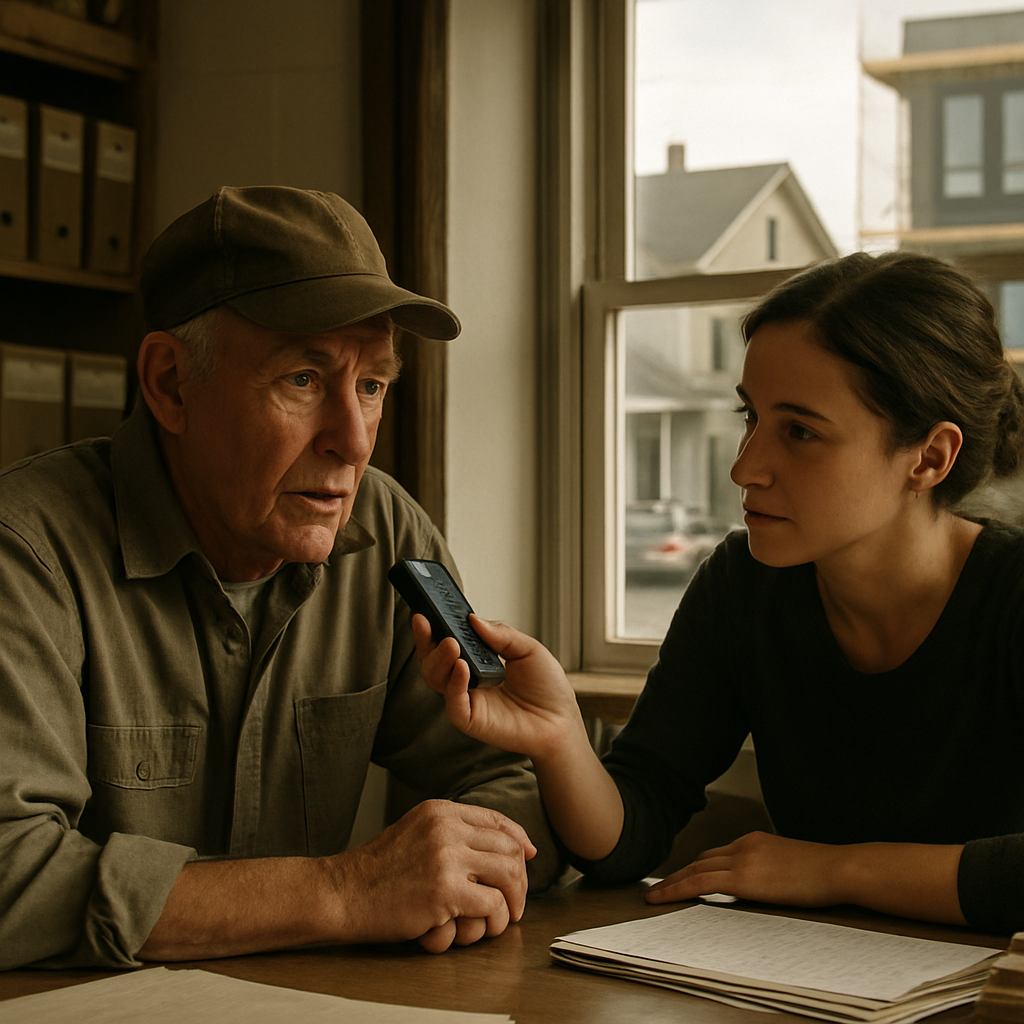
Redevelopment cannot be judged by new buildings alone. It also matters who can stay, which parts of local identity endure and whether the city’s account of progress recognises the lives that made the place meaningful.